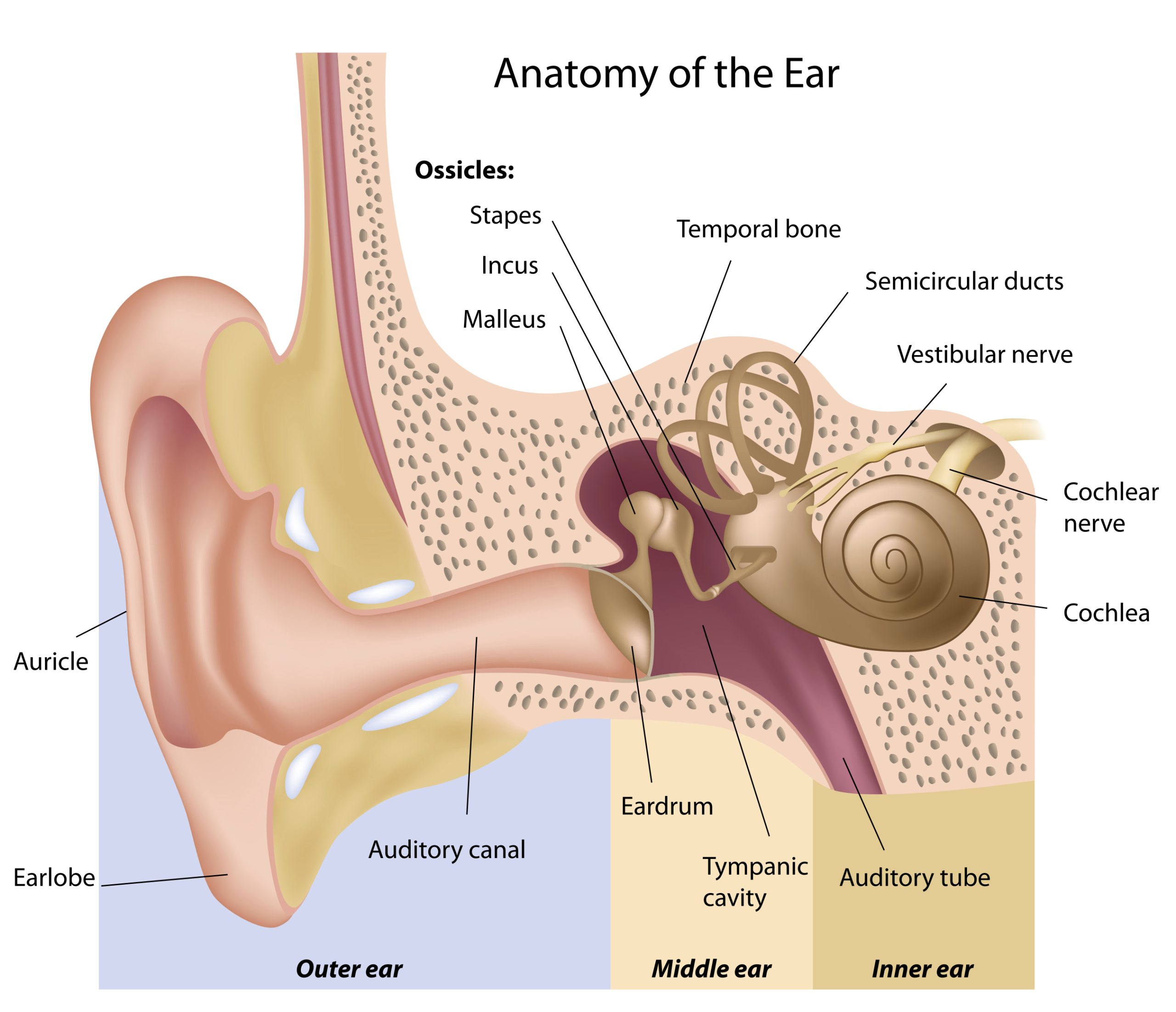
Background of hearing loss Hearing lossType Clinical features Ear anatomy Outer earAuricle Senses incoming sound waves and transmits to external auditory canal External auditory canal (EAC) Middle earTympanic membrane (TM) Sound waves vibrate against TM to move ossicles Ossicles (Stapes, Incus, Malleus) Push inner ear fluid around cochlea Middle ear canal Inner earCochlea Semicircular canals Internal auditory canal Transmits sound via cochlear (auditory) nerve to brain for sound perception Classification Sensorineural hearing loss (SNHL) Defect is nerve conduction of perceived sound Involves inner ear, cochlea, or auditory nerve Conductive hearing loss (CHL) Defect in conduction of sound from outer ear to inner ear Mixed Combination of conductive and sensorineural hearing loss Sudden sensorineural hearing loss (SSNHL) Decreased hearing > 30 dB affecting > 3 sound frequencies within 72 hours or less Usually associated with tinnitus, ear fullness, and vertigo (Next Lesson) Etiologies of hearing loss Back to Hearing loss No Comments Comments are closed.

No Comments