| Definitions | - Anemia
- Decreased number of circulating red blood cells (RBCs) measured as either hemoglobin concentration, hematocrit (HCT), or RBC count
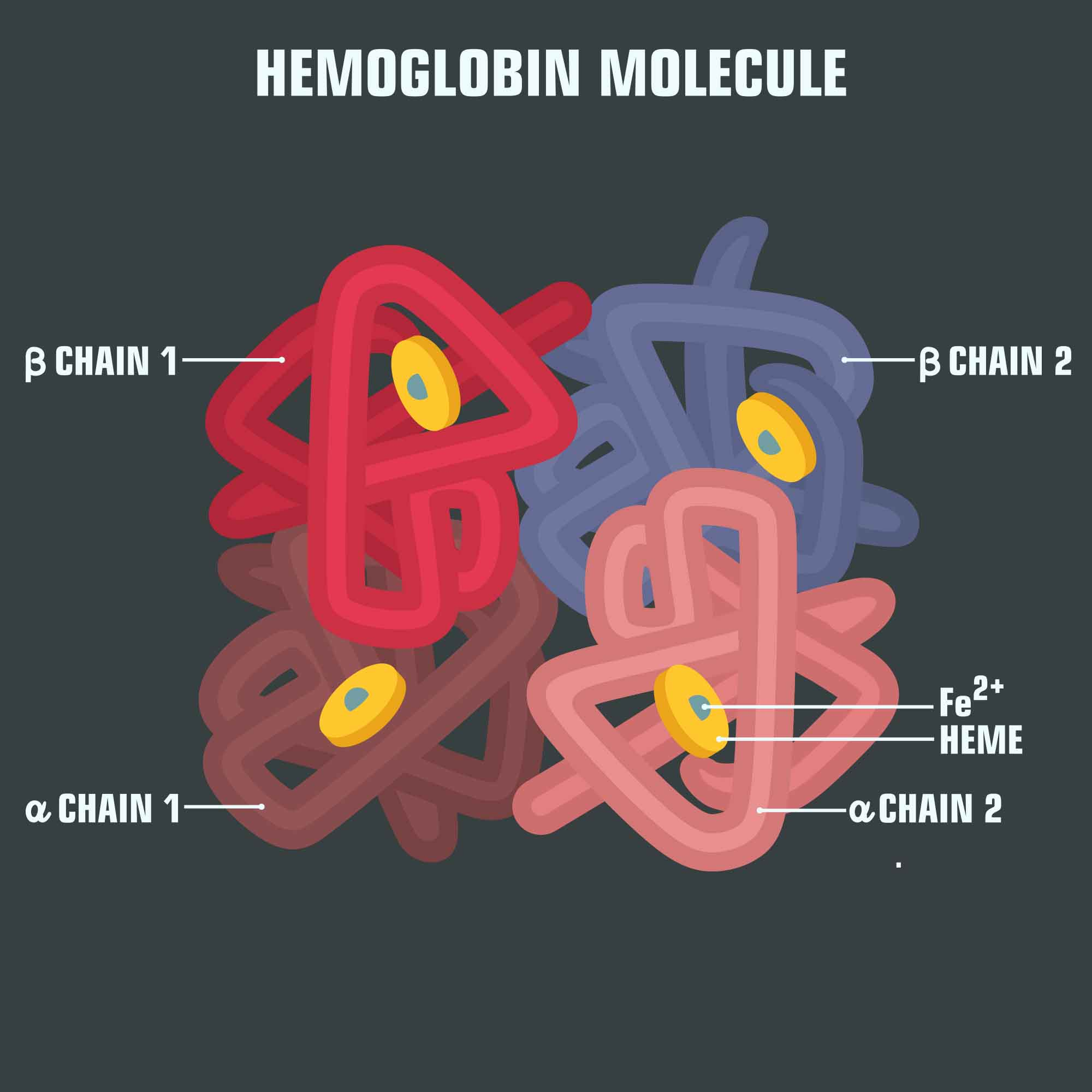
- Hemoglobin concentration
- Concentration of hemoglobin in whole blood
- Can range from 13-14.2 g/dL (men) and 11.6-12.3 g/dL (women)
- Value can vary in athletes, people living at high altitude, smokers, older adults
- Hematocrit (HCT)
- Mean corpuscular volume (MCV)
- Percentage of RBCs in spun blood
- HCT= (RBC times MCV)/10
- Usually equals Hgb times 3
- Number of RBCs in whole volume of blood (millions of cells/microliter)
- RBC indices
- Mean corpuscular volume (MCV)
- Average size of a patient’s RBCs
- Reported as femtoliters (fL)
- MCV= 10 (HCT)/RBC
- Defined as microcytic, normocytic, or macrocytic
- Mean corpuscular hemoglobin (MCH)
- Average hemoglobin content in a RBC
- Reported as picograms (pg) per cell
- MCH= Hgb (10)/RBC
- Defined as hypochromic, normochromic, or hyperchromic
- Mean corpuscular hemoglobin concentration (MCHC)
- Average Hgb concentration per RBC
- Reported as g/dL
- MCHC= Hgb (10)/HCT
- Red cell distribution width (RDW)
- Measures variation in RBC size (anisocytosis)
- RDW= (standard deviation of RBC size/MCV) (100)
|

No Comments