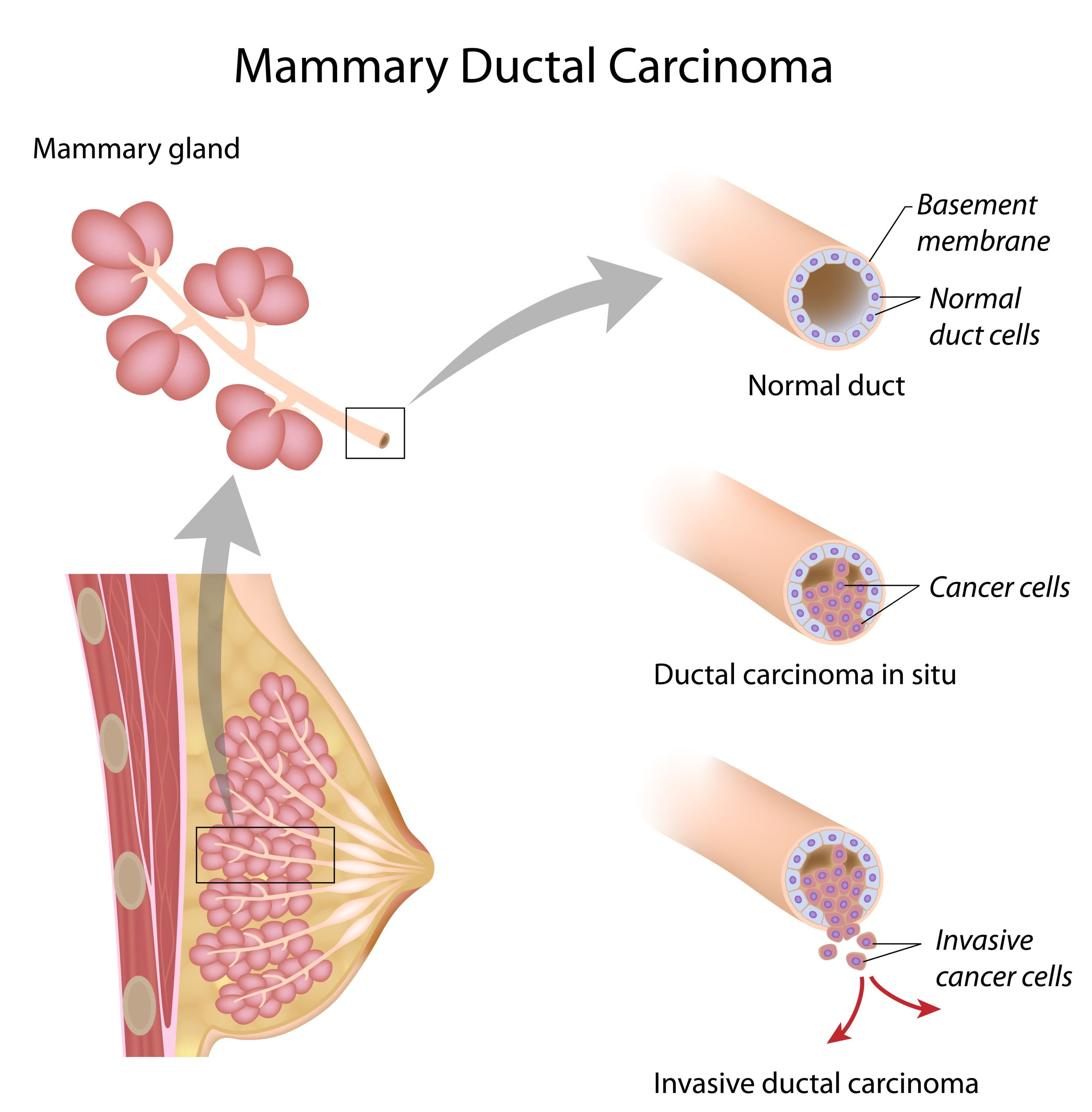
Background of breast cancer Breast cancer screeningType Clinical features Risk factors Increasing age Increased risk after age 50 Female sex Cancer 100 times more likely in women compared to men Personal history of breast cancer Increased risk of development in contrlateral breast Inherited genetic mutations BRCA1, BRCA2, BRCA3 CDH11 p53 PALB2 PTEN STK11 Delayed menopause Dense breast tissue Early menarche Exposure to ionizing radiation to chest between ages 10-30 Family history of breast cancer in first-degree female relatives Increased age of first pregnancy Increased alcohol consumption Increased endogenous estrogen levels Nulliparity Obesity Smoking Common breast cancer pathology Infiltrating ductal carcinoma Most common type of invasive breast cancer (70-80%) Cords and nests of cells o histology with varied glandular formation Infiltrating lobular carcinoma Small cells on histology that invade mammilary glands and adipose tissue in linear pattern Mixed ductal/lobular carcinoma Also referred to as mixed invasive carcinoma with both ductal and lobular carcinoma characteristics Molecular subtypes Luminal subtypes Majority of estrogen receptor (ER) and progesterone receptor (PR) positive cancers Types A and B Human epidermal growth factor receptor 2 (HER2) enriched High expression of proliferating gene clusters and low luminal subtype expression Often ER/PR negative Basal subtypes (triple negative breast cancer) Negative for ER, PR, and HER2 (Next Lesson) Clinical presentation of breast cancer Back to Breast cancer screening No Comments Give a comment Cancel replyYou must be logged in to post a comment.

No Comments