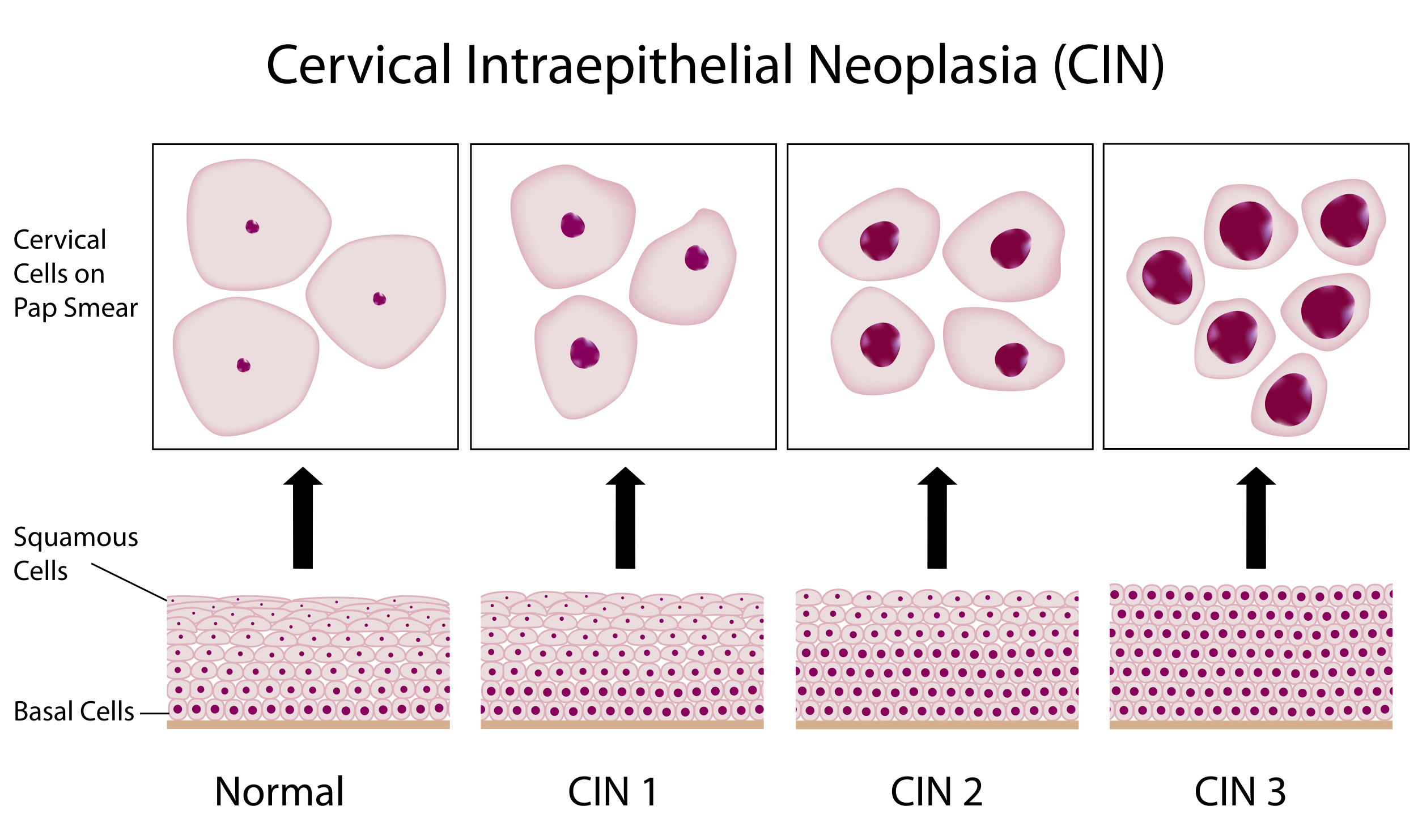
Background of cervical cancer Approach to Cervical cancer screeningType Clinical features Pathogenesis of colon cancer Human papilloma virus (HPV) found in > 99% of cervical cancer HPV 16 and 18 found in > 70% of cervical cancers Persistent HPV infection Affects cervical transformation zone (area between squamous epithelium of ectocervix and glandular epithelium of endocervix) Can take up to 15 years in some cases Leads to metaplasia, dysplasia, and eventual carcinoma with invasion Squamous cell, adenocarcinoma, or others Risk factors HPV related History of vulvar or vaginal squamous intraepithelial neoplasia/cancer Immunosuppression Multiple sexual partners Onset sexual activity < age 21 Personal history of sexually transmitted infections Sexual partner with known HPV infection Non-HPV related Cigarette smoking Low socioeconomic status Oral contraceptive use Types of cervical pathology NILM Negative for intraepithelial lesion or malignancy AGC Atypical glandular cells Cervical intraepithelial neoplasia (CIN) CIN 1 has mild dysplasia CIN 2 has moderate dysplasia CIN 3 racnges from severe dysplasia to carcinoma in-situ Atypical squamous cells of undetermined significance (ASC-US) Abnormal apearing cells without obvious squamous intraepithelial lesion Low grade squamous intrepithelial lesions (LSIL) HPV associated lesions that could possibly regress over time Includes CIN 1 and p-16 negative CIN 2 Atypical squamous cells cannot exclude HSIL (ASC-H) Cells with likely mixture of HSIL and cells mimicking HSIL High grade squamous intraepithelial lesion (HSIL) High risk HPV associated lesions that can progress to CIN or cancer Includes p-16 positive CIN 2 and CIN 3 Classification LAST (Lower anogenital squamous terminology) Cytology & Histology LSIL, HSIL Bethesda classification system Cytology LSIL, HSIL Histology CIN 1, CIN 2, CIN 3 (Next Lesson) Clinical presentation of cervical cancer Back to Approach to Cervical cancer screening No Comments Comments are closed.

No Comments